


Leading Organization Change
(Click picture to view page)
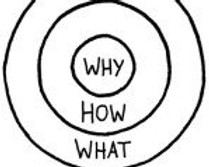
Why · How · What

(Click picture to view page)
Influencer Strategy

(Click picture to view page)
4DX
EDLD 5304 Leading Organization Change has been a beneficial class for me, even though I am currently not employed by any organizations. In the business of college football, you rarely get to keep your job for long periods of time. If your team is not doing as well as expected, you have to move. If you happen to be part of a winning program, you still have to move… A commodity in that world is getting on the front-end of a head coach’s contract. That means that if you have the ability to get on a staff with a new head coach for that program, you could possibly buy yourself few more years in the profession. Some of the best coaches I know have been coaching in college or professional football for two or three decades, but have never been with one team for more than three years. Other great coaches I have worked with were “gurus” in the NFL at the age of 25, but were out of football by 32, now in medical sales or own restaurants.
When there are millions of dollars at stake, jobs and families on the line, “crucial” conversations occur by the minute, but I have a lot to learn on that front. When I was a young coach, getting into the business, my mentor told me to have a pen with me at all times and to keep my mouth shut; only speak when spoken to. An interesting thing about football culture is that once you become a head coach, people stop talking to you freely. A lot like the CEO of some companies, head coaches become unapproachable whether it be the personality of head coaches or the dictatoresque position they are in. Being a Filipino-American in the sport of football, I do not have many advocates in the business. I was raised to be humble and to respect my elders, women, and authority. Given all that, my tendency is to maintain silence when confronted with a situation, both personally and in the work setting. I am learning through both the hard way and through EDLD 5304/Crucial Conversations, that silence is a killer. I often turn down the conversation when it comes to something that benefits myself or is asking something of someone else. The more efficient and effective way to go about business is to create an open dialogue to get all the ideas and facts in the air so people can make informed decisions. Learning how to communicate persuasively in a “safe” setting of mutual purpose and respect might have saved my most recent job. Instead I chose to keep my head down, my mouth shut, and work hard with a new staff that retained me without knowing who I really was. In hindsight, that was the wrong choice.
EDLD 5304 has helped me organize my thoughts for creating change in an organization. My plan is to stay in football and education, so it is a skill that I will be using for a long time. We started the class by taking Simon Sinek’s (2014) concept that “people don’t by what you do, they buy why you do it.” We also discussed Dr. Kotter’s idea that creating urgency will help get things done, because putting action off on ideas often leads to inaction. The next portion of the course broke down vital behaviors of change, and the 6 sources of influence, as inspired by the book Influencer: The New Science of Leading Change (Grenny et al. 2013). Then we learned about the 4 Disciplines of Execution and the 5 Stages of Change by McChesney, Covey, and Huling (2012). With these ideas I put together a plan to incorporate a virtual reality football simulator. My original plan was an idea how to make systemic change with the players, but with the help of Dr. Harapnuik, I now understand for the change to be sustainable, it has to start at the executive level, in this case the coaches. Although I will not be able to put my plan into place, the concepts will stick with me through the rest of my career. As learned in EDLD 5304, the blueprint I use would start with my "Why", and would be followed by my Influencer Strategy and 4DX plan for the implementation of a virtual reality simulator (links also available at the links at the top of this page).
References:
Grenny, J., Patterson, K., Maxfield, D., McMillan, R., & Switzler, A. (2013). Influencer: The new science of leading change. New York: McGraw-Hill Education.
Kotter, J. (2013). Leading change: Establish a sense of urgency. [video]. Retrieved from https://www.youtube.com/watch?v=2Yfrj2Y9IlI
McChesney, C., Covey, S., & Huling, J. (2012). The 4 disciplines of execution: Achieving your wildly important goals. New York, NY: Free Press.
Patterson, K., Grenny, J., McMillan, R., & Switzler, A. (2012). Crucial conversations: Tools for talking when stakes are high. New York: McGraw-Hill.
Sinek, S. (2014). Start with why: Ted talk short edited. [video]. Retrieved from https://www.youtube.com/watch?v=IPYeCltXpxw